


The February 6, 2023, earthquakes in Turkey and Syria damaged over 100,000 buildings, caused more than 10,000 collapses, and killed more than 50,000 people. These earthquakes also tested advanced building technologies designed to minimize damage and keep buildings functioning after a quake.
Several hospitals built with one such technology – called a seismic isolation system – survived with almost no harm, even while surrounding buildings sustained heavy damage.
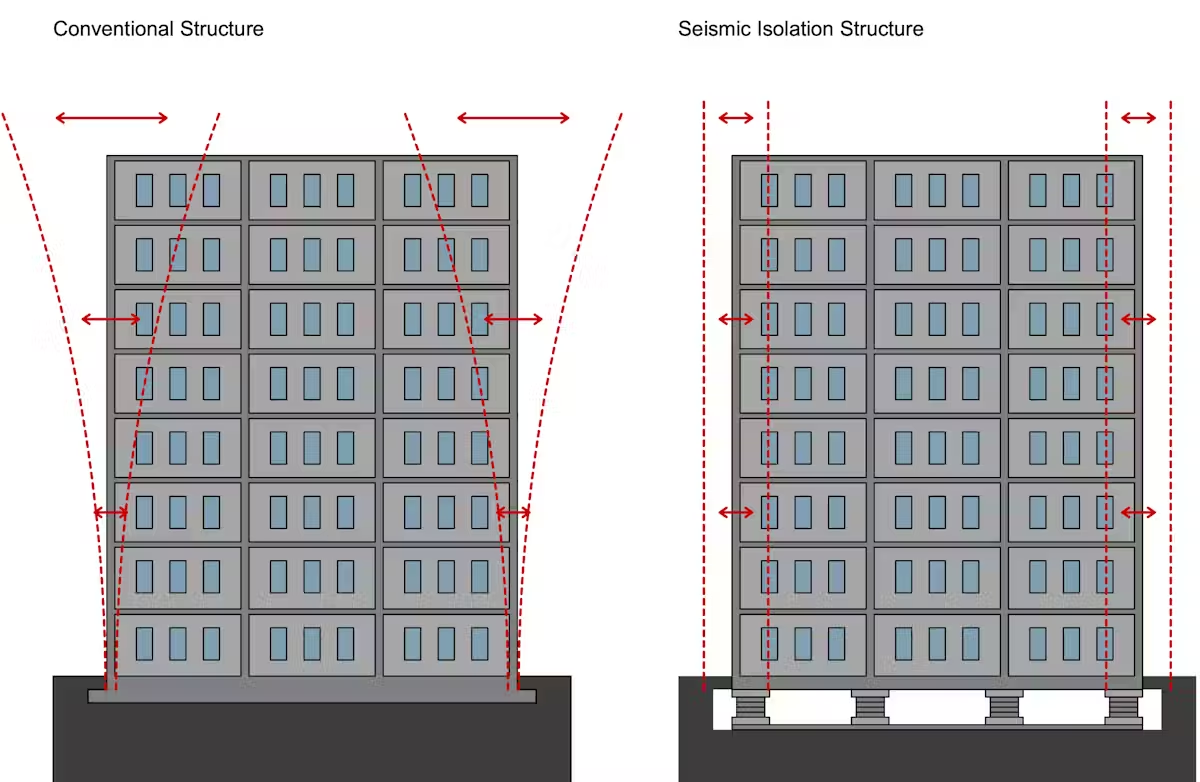
Adana City Hospital, built to record both ground shaking and the building’s response, saw a 75% reduction in shaking thanks to its seismic isolation system, according to its designers. This allowed it to remain operational after the quake.
Why Don’t More Buildings Use Seismic Isolation?
Although engineers aren’t surprised by the performance of these hospitals, many have wondered why more buildings don’t use such advanced technologies.
The author, a civil engineer who studied in Istanbul after the 1999 İzmit earthquake and now works in the U.S. on advanced earthquake-resistant technologies, notes that despite proven effectiveness, seismic technologies are still rare.
Earthquake-Resilient Building Technology
Engineers can control how buildings respond to earthquakes in several ways:
- Traditional methods rely on structural components like columns and beams absorbing seismic energy, often leading to damage that can make buildings uninhabitable.
- Seismic isolation systems and seismic dampers reduce the energy entering the structure or absorb it safely.
How These Technologies Work
- Seismic isolation systems use layers of rubber or steel with friction materials, placed between a building’s foundation and superstructure, to limit how much seismic energy enters the structure.
- Seismic dampers, installed on each floor, act like car shock absorbers, converting energy into heat and reducing damage.
Both systems aim for “functional recovery” – ensuring a building remains usable after an earthquake. This is more advanced than the “life safety” standard required by most modern codes, which only ensures the building won’t collapse but may be too damaged for use.
The Case in Turkey
Most of the severe damage in Turkey came from nonductile concrete buildings built before the 1998 Turkish building code revision. These lacked flexible reinforcement and had poorly arranged steel reinforcements, making them prone to collapse.
Additionally, soft-story buildings – where open, unreinforced ground floors are used for shops or parking – were especially vulnerable. These exist in many cities worldwide, including Istanbul, San Francisco, Los Angeles, and Vancouver.
Strengthening older buildings to meet life safety codes is possible but costly and requires strong policy support.
Lessons Learned
The 2011 Christchurch earthquake in New Zealand showed the limitations of the life safety standard. Although buildings didn’t collapse, the damage was so extensive many had to be demolished. This event shifted focus to the functional recovery model.
Seismic protection technology typically adds less than 5% to construction costs – much lower than the costs of economic and social disruption after a major quake. For example:
- Christchurch: $32 billion in losses, $24 billion in construction.
- Turkey (2023): Over $84 billion and still counting.
Moving Forward
The earthquakes in Turkey prove that seismic protection technologies work. To prevent massive future losses:
- Authorities should update building codes to support functional recovery.
- Financial incentives and policy tools should promote resilient design.
- Insurance discounts and tax benefits could offset initial costs.